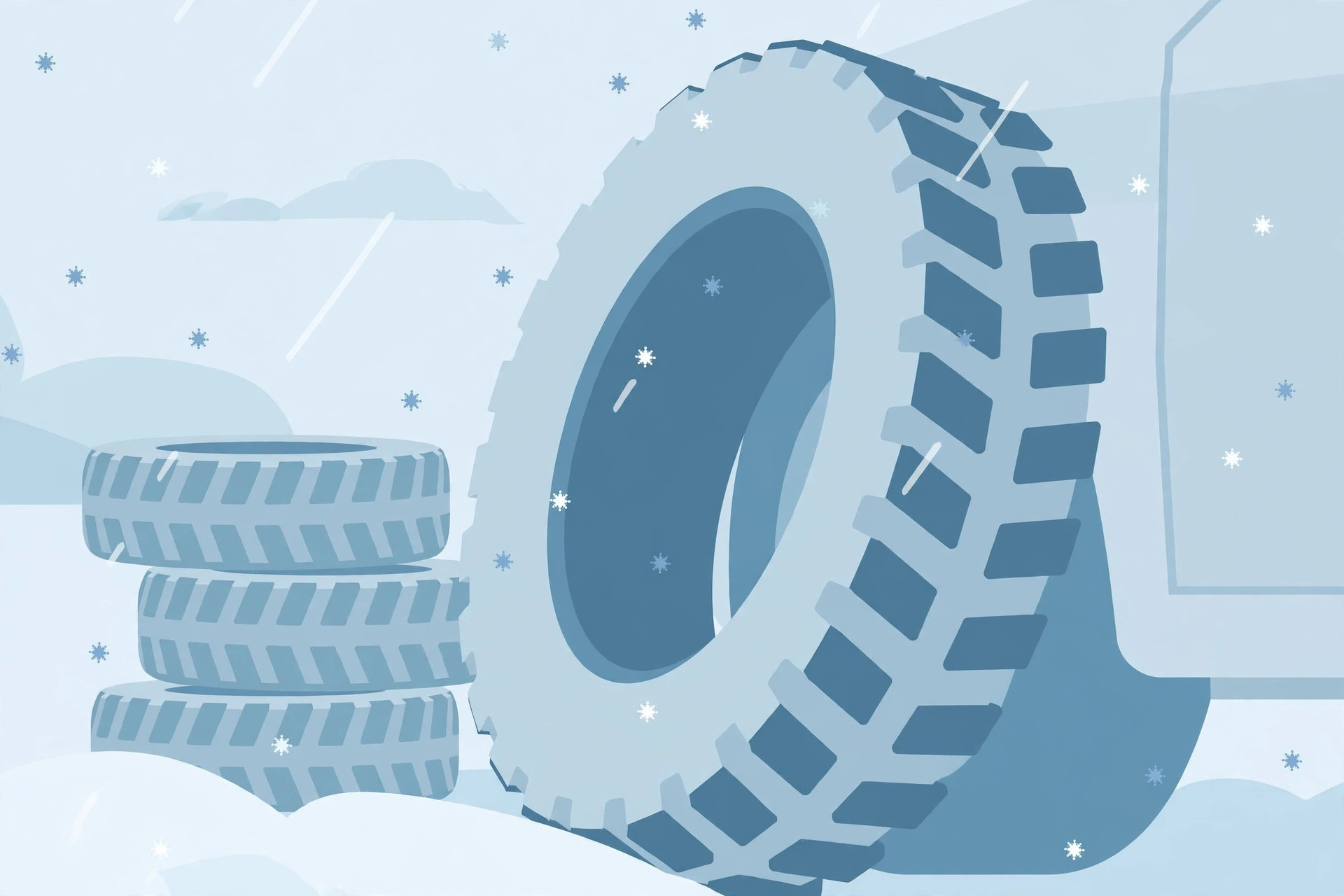
Winter Tires: What to Know Before the First Snow
What winter tires do differently, when to make the swap, and how to store your off-season set so it lasts.
Read the guide →Calm, plain-language guides for winterizing your car

Eight short, practical guides to winter tires, your battery, emergency supplies, fluids and wipers, calmer driving on snow, block heaters, engine warm-ups, and winter washing. No jargon, no hype, just what matters and when to ask a professional for help.
Winter is hard on cars: cold thickens oil, drains batteries, and turns a quick errand into a slide you didn't plan for. A little preparation in the fall prevents most winter car trouble. These guides are general information for everyday drivers, when something's beyond your comfort level, a qualified mechanic or tire shop is the right call.
What winter tires do differently, when to make the swap, and how to store your off-season set so it lasts.
Read the guide →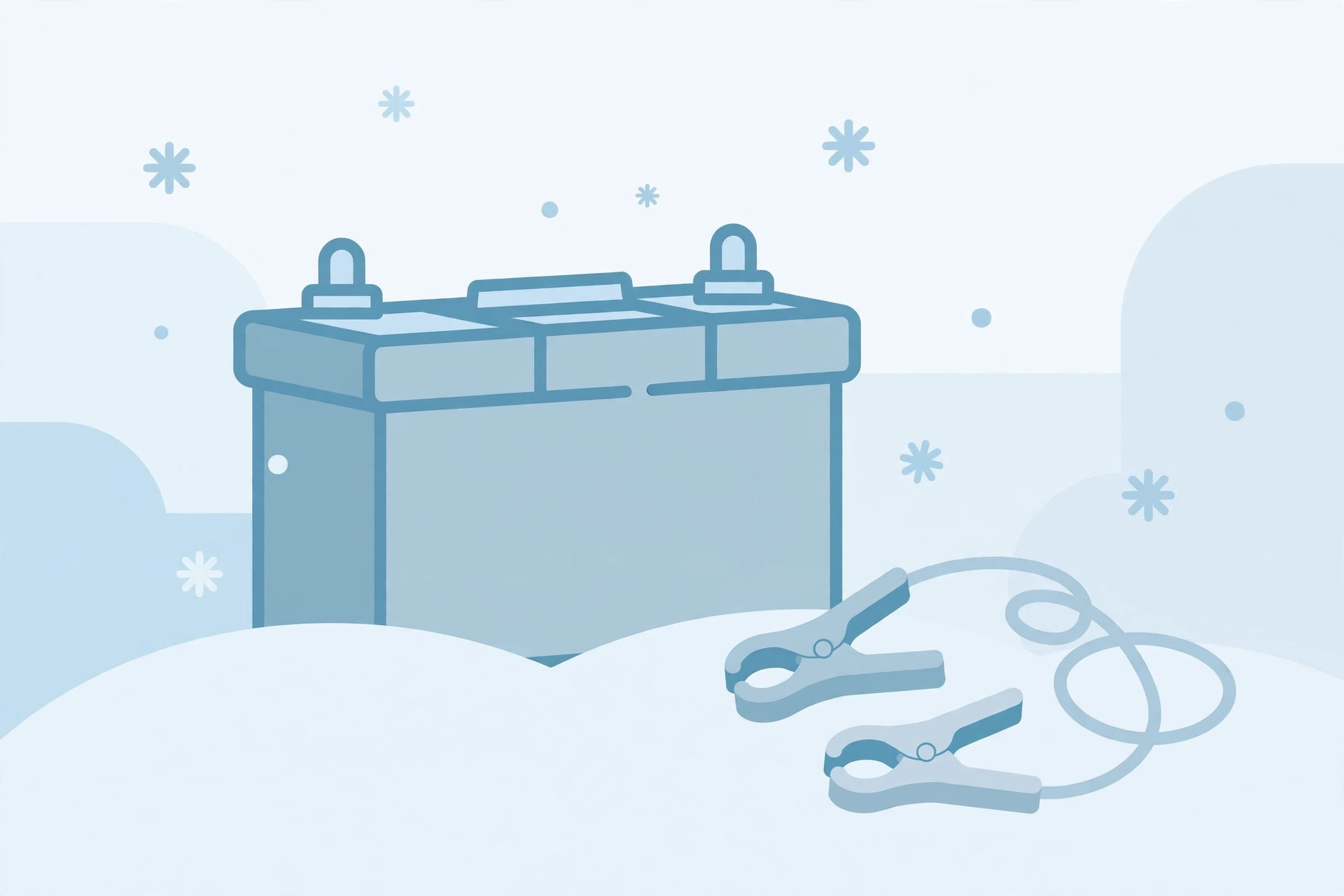
Why cold weather is so hard on batteries, the warning signs yours is fading, and how a quick shop test removes the guesswork.
Read the guide →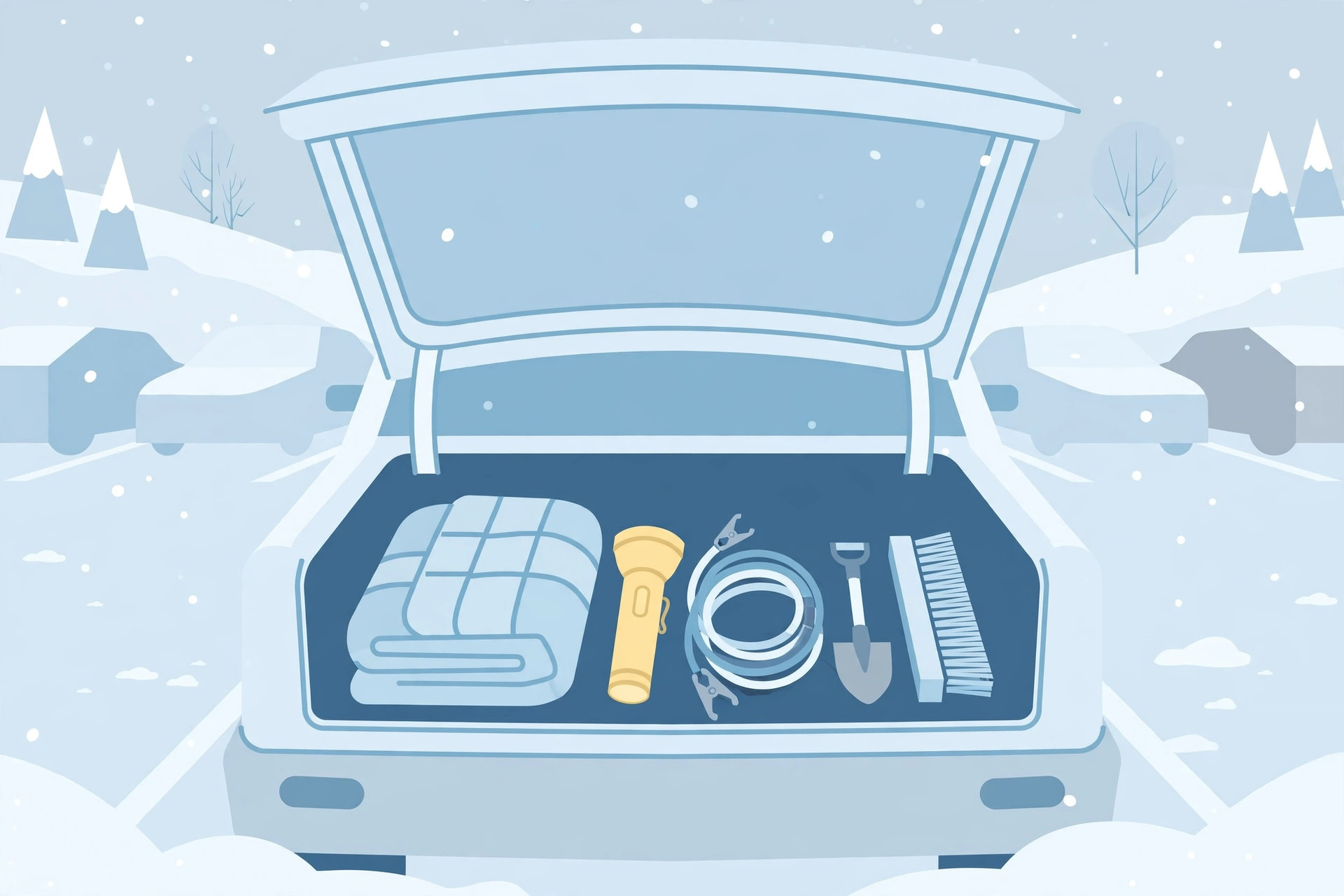
The blanket, scraper, cables, and small extras that turn "stranded" into "inconvenienced." A simple checklist to build once.
Read the guide →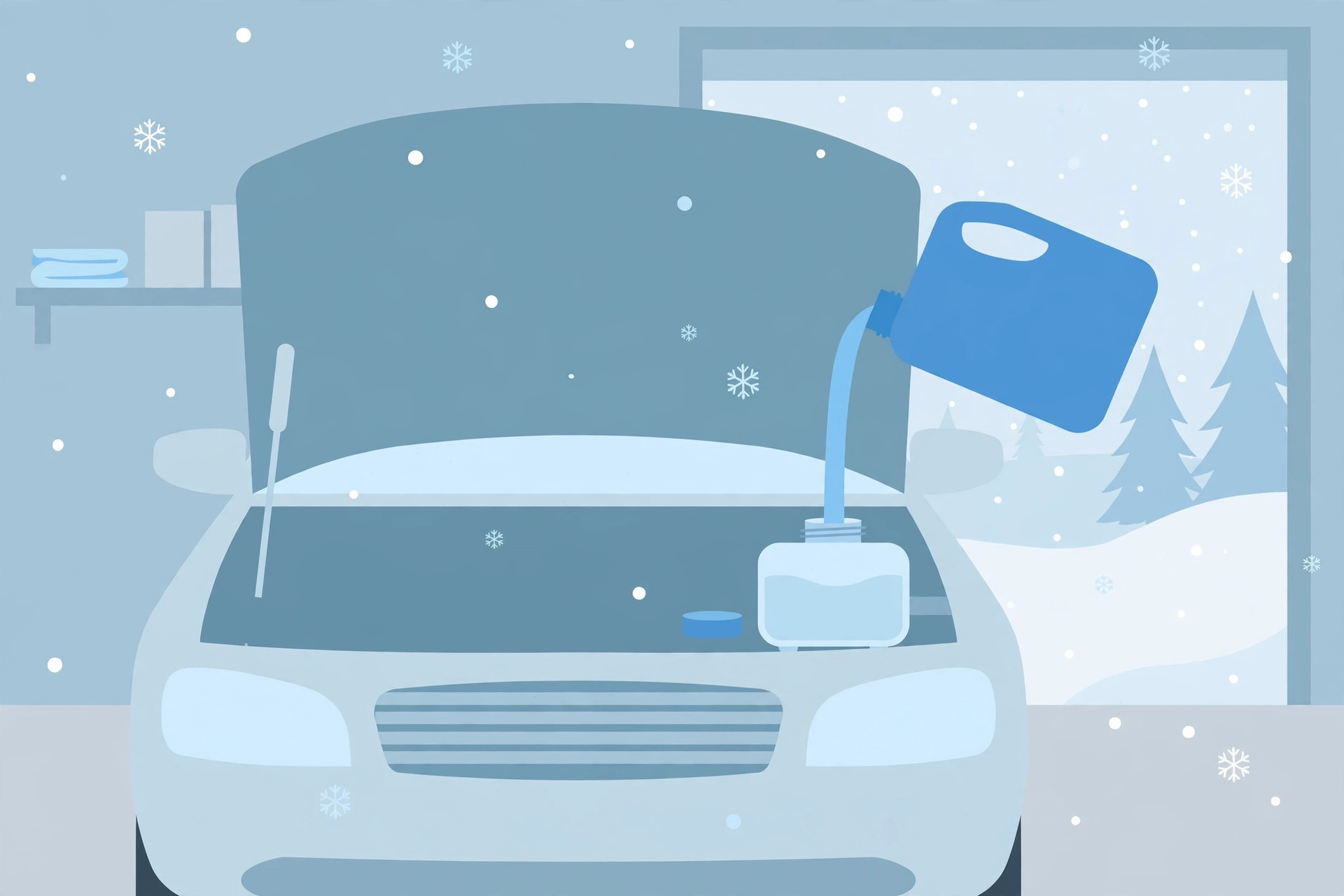
Washer fluid rated for freezing temperatures, oil basics from your owner's manual, and the wiper test that takes thirty seconds.
Read the guide →
Gentle inputs, generous following distance, and what to do if the car slides, general guidance for winter roads.
Read the guide →
How a block heater works, how to check if your car has one, the real cost of running it, and whether you need one at all.
Read the guide →
Why long idling can hurt, the diesel and extreme-cold exceptions, and a cold-morning routine you can run on autopilot.
Read the guide →
How to wash road salt off when it's freezing, which wash method suits winter, and whether unlimited plans pay off.
Read the guide →Resting, cranking, and running voltage with a multimeter, a verified state-of-charge chart, and when a shop load test makes the final call.
Read the guide →Sand, cat litter, traction boards, and floor mats compared, what each one actually does, where it fails, and when to stop and call for help.
Read the guide →The full outdoor storage procedure: breathable cover, full stabilized tank, the battery decision, and layered critter prevention.
Read the guide →The fastest safe defrost sequence, the climate settings that clear inside fog, what never to pour on cold glass, and how to prevent overnight ice.
Read the guide →Diagnose seal, lock cylinder, or latch first, thaw gently without damaging paint or electronics, and prevent it with the fall routine.
Read the guide →What AWD actually does, why tires decide turning and stopping, a go-turn-stop comparison, and a framework for spending in the right order.
Read the guide →Reach math, bristle vs foam, the -40C plastic limit, and the roof-first clearing order, the snow brush and scraper decision in one guide.
Read the guide →The official standard is clean, working, and aimed, plus the walk-around check, the Ontario lights-and-plates rule, and low-beam discipline for fog and snow.
Read the guide →About 1 psi lost per 5°C drop, the steady-vs-flashing TPMS split, and the 9-step cold-tire check with a worked cold-snap table.
Read the guide →Six systems, what each one needs, what snow does to it, and the winter call, plus the pre-drive sensor-clearing procedure.
Read the guide →Molded tray, flat rubber, or carpet sorted by containment, plus the retention and pedal-clearance gate, and the salt-cleaning routine.
Read the guide →Hydrometer, refractometer, and test strips sorted by what each measures, the verified -34F spec for a 50/50 mix, and when to top up, flush, or book a shop.
Read the guide →Oil spray at $150-$200 a year in the one retrieved Canadian price set, judged by mechanism against two-step systems, hard coatings, wax, and electronic modules.
Read the guide →Gasoline does not freeze above about -40F, condensed water does. The half-full tank rule, isopropyl antifreeze, and diesel gelling at 15-20F.
Read the guide →Clean, dry, mark FL FR RL RR, and bag one tire per airtight bag, then mounted tires stacked flat or hung, unmounted upright at 10-25C.
Read the guide →The grey-white vs black-shiny cue, the missing-spray test, the 4 C to -4 C danger window, and why pulling off is a legitimate decision.
Read the guide →Over 0.25 L per 10 idle minutes, three municipal idling limits that disagree, and parasitic drain measured against the 50 mA benchmark.
Read the guide →Diagnose reservoir, lines, or nozzles first, thaw gently with no boiling water, then drain, refill to the -40 C class, and purge the lines.
Read the guide →The stop check before any clamp, the exact clamp order with the 30 cm ground rule and 15 second crank limit, hybrid and EV differences, and the charge, test, or replace decision after it starts.
Read the guide →Tailpipe and the snow around the car first, engine last: the garage rule, the remote start trap, and the symptoms that mean get out and call 911.
Read the guide →Inspect first to separate refresh, restore, and replace, then the verified 500, 800, and 3,000 grit sequence, household shortcuts judged, and the UV sealant that decides how long it lasts.
Read the guide →CAA measured 14 to 39 percent less than rated range on a Canadian highway test, controlled data shows short trips cost more, and the two kinds of preconditioning do different jobs.
Read the guide →The temperature gradient and frozen moisture that run a quiet chip, a repair table putting MPI's published 12 inch criterion beside the US rules of thumb, and the cold morning protection procedure.
Read the guide →Four blade structures tabled by snow handling and weakness, a wet test with named fail symptoms for the blades already on the car, and the frozen to glass release sequence.
Read the guide →