Winter Tires: What to Know Before the First Snow
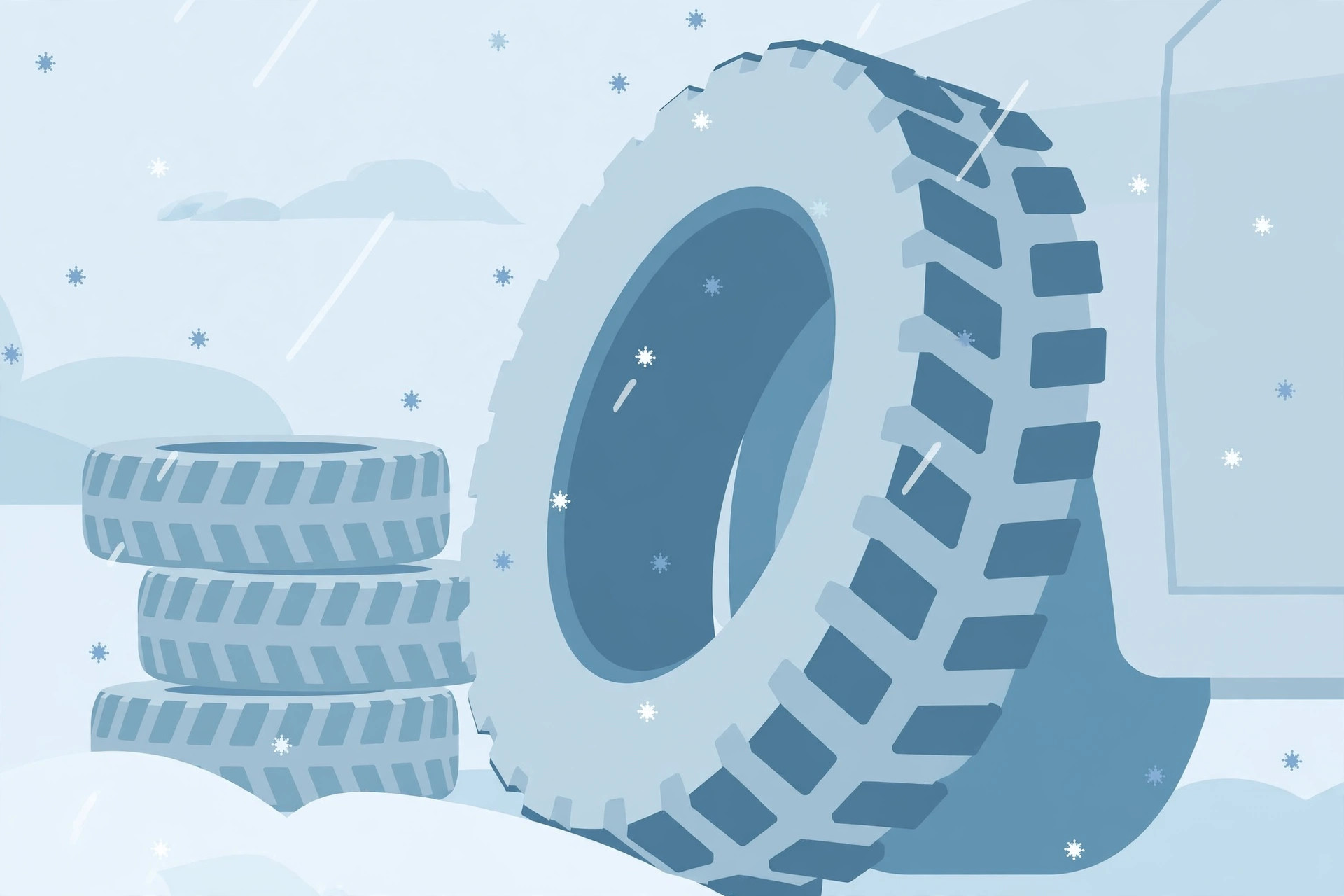
Of everything on this site, tires are the single biggest lever for winter safety. Not the engine, not the drivetrain — the four small patches of rubber connecting your car to the road. Here is what winter tires do differently, when to put them on, and how to keep your other set in good shape.
What winter tires actually do differently
All-season tires are a compromise: decent in summer, passable in light winter weather. Winter tires are built for cold specifically, and two things set them apart.
First, the rubber compound. Regular tire rubber stiffens as the temperature drops, and stiff rubber grips less. Winter tires use a softer compound that stays flexible in the cold, so the tread can conform to the road surface and hold on. This matters even on dry, clear pavement in winter — it's the cold, not just the snow, that the tires are designed for.
Second, the tread design. Winter tires have deeper tread and lots of tiny slits in the tread blocks (called sipes). Those edges bite into snow and slush, and the wider grooves channel slush and water out so the tire can reach the road. On snow, winter tires genuinely work like snow grips on boots — they pack and grip in a way a highway tire can't.
When to make the swap
The common rule of thumb: when daytime temperatures are consistently near or below freezing, it's time. Because the rubber is designed for cold, swapping early is better than swapping late — the goal is to have them on before the first surprise snowfall, not the morning after it.
Book your appointment early. Tire shops get booked solid the week the first storm is forecast, and everyone has the same idea at the same time. A changeover in late fall, before the rush, means no waiting and no driving on a snow day thinking "I should have."
Swap all four. Running winter tires only on the front (or only the rear) creates a grip mismatch: one end of the car holds while the other slides. On a front-wheel-drive car that can mean the rear swings out in corners. A matched set of four keeps the car balanced.
Tread depth and pressure matter too
Winter tires are only as good as their tread. If yours have been through several seasons, check the remaining tread — shallow tread can't channel slush away, and that's when winter tires start behaving like worn all-seasons. Most tires have small raised bars in the tread grooves (wear indicators); when the tread surface is flush with those bars, the tire is done.
Cold air shrinks tire pressure. A tire that was fine at Thanksgiving can read noticeably low on a frigid January morning. Check pressures monthly through the winter, and use the number printed on your driver's door jamb or in the owner's manual — not the maximum printed on the tire's sidewall.
Storing your off-season set
Your all-seasons need to hibernate through winter somewhere that won't ruin them. The basics:
- Clean them first. Hose off road salt and grime; salt left on wheels all winter invites corrosion.
- Cool, dry, and dark. A garage corner beats a sunny deck. Heat and UV age rubber faster than anything else.
- Standing upright is ideal if they're off the rims; if they're mounted on wheels, stacking them flat works fine. Avoid hanging them by the rims for months — it can stress one side.
- Away from heat sources like furnaces and electric motors, and away from solvents or fuels that off-gas.
Tire bags (or even large lawn bags) keep dust and light off. Mark each tire with its position — front-left, rear-right, and so on — with chalk so you can rotate sensibly next season.
The bottom line
Winter tires are the highest-value winter upgrade most drivers can make: soft compound for cold grip, tread that bites snow, all four corners matched. Put them on before you need them, keep the pressure checked, and store the other set somewhere kind. And if any of this feels outside your comfort zone, the tire shop down the road answers these exact questions every single day.