Build a Winter Emergency Kit for Your Trunk
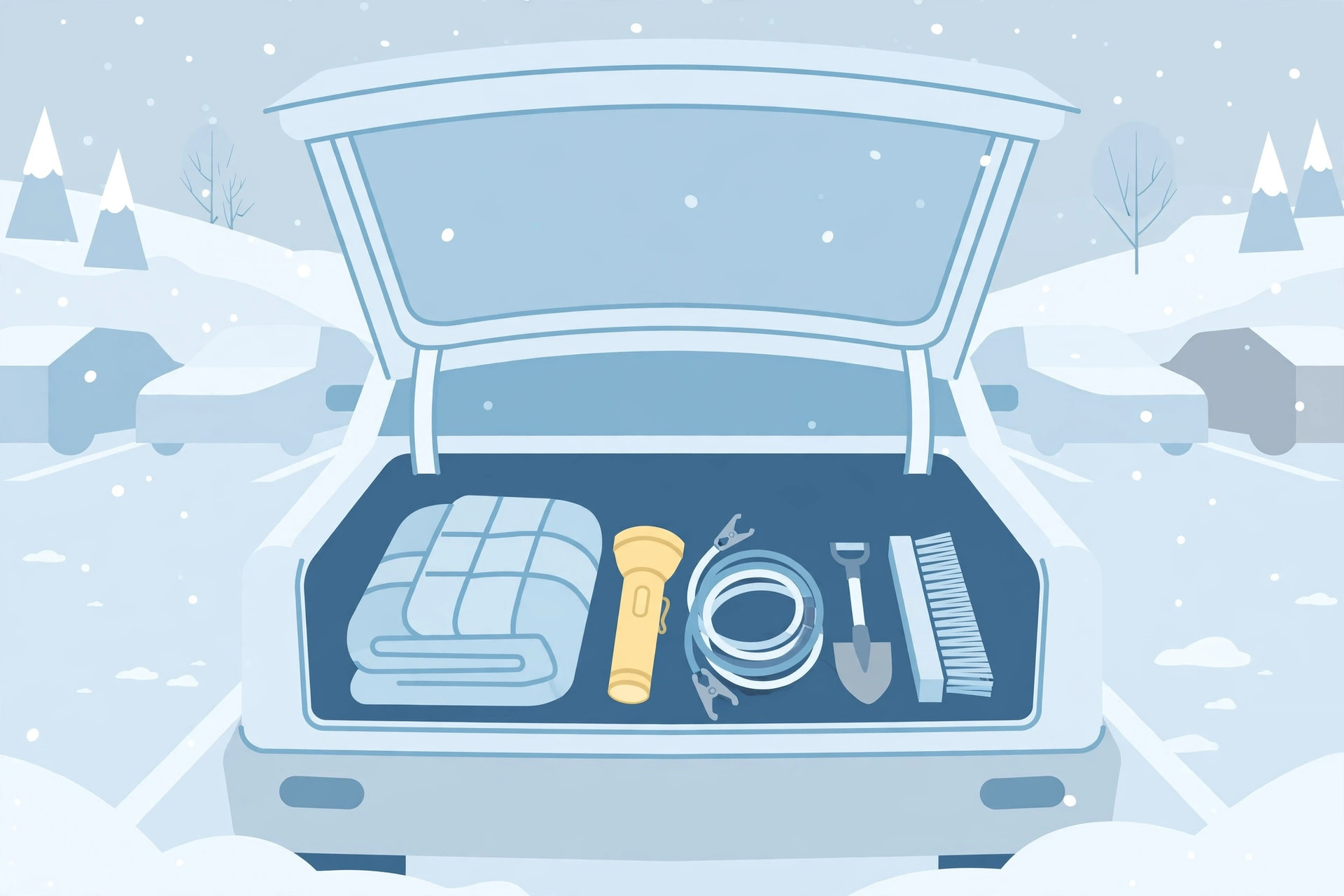
Most winter car emergencies aren't dramatic. They're a dead battery in a half-empty parking lot, a slide into a snowbank on a side road, or traffic that stops moving for two hours in falling snow. None of them is scary if you're warm, visible, and have the tools to get going again. That takes one afternoon and one trunk.
The core checklist
You don't need anything exotic. Build the kit from things you mostly already own:
- A warm blanket or sleeping bag. Wool or fleece, dedicated to the trunk — not the one from your couch. If you're stuck with the engine off, this is the most important item in the kit.
- Extra warm clothing. A spare hat, gloves, and warm socks in a bag. Hands and feet get cold first when you're digging out a car.
- Ice scraper and snow brush. The long-handled kind that reaches the whole windshield. Clear the whole car before driving — snow left on the roof becomes a whiteout for the driver behind you when you brake.
- Booster cables or a portable jump pack. Cables are cheap; a charged jump pack works without a second car. Either one only helps if it's actually in the trunk when you need it.
- A small shovel. A collapsible or short-handled shovel digs a car out of a drift far faster than your hands and a floor mat.
- Flashlight and extra batteries. Winter means driving in the dark. A headlamp is even better — it leaves both hands free.
- Snacks and water. A few granola bars and a bottle of water, refreshed occasionally. Low blood sugar plus stress is a bad combination.
- A phone charger or power bank. A dead phone in a stranded car is how a nuisance becomes a real problem.
- First-aid kit. A basic one — bandages, antiseptic, anything you personally need.
- Visibility gear. A reflective vest or bright cloth, and flares or a reflective warning triangle if you have them. Being seen on a dark, snowy shoulder is survival.
- A bag of sand, salt, or cat litter. Spread under spinning tires for traction. Also useful: old floor mats can go under the drive wheels in a pinch.
- Basic tools. A tire pressure gauge, the car's jack and lug wrench (verify they're actually there), and a roll of duct tape.
If you do get stranded
General guidance for the stuck-in-snow scenario:
- Stay with the car. It's shelter, and it's what rescuers find. Walking out into a storm is how things go badly.
- Make the car visible. Turn on the hazard lights. If you have flares or a triangle, use them — but only if you can set them up without stepping into traffic.
- Run the engine in bursts for heat, with a window cracked open slightly for fresh air.
- Clear the exhaust pipe. This one is critical: before running the engine while buried in snow, make sure the tailpipe is clear. A blocked exhaust can push carbon monoxide into the car.
- Move a little to stay warm, and stay hydrated with the water you packed.
Check it once, then forget it
Throw everything in a duffel or storage bin so it doesn't migrate around the trunk. Once a year — when you swap to winter tires is a natural moment — check the kit: batteries still good, snacks not expired, jump pack charged, blanket still there (they have a way of wandering indoors).
The bottom line
A winter emergency kit is insurance you can touch. Blanket, warm clothes, scraper, cables, shovel, light, snacks, water, charger, visibility gear, traction aid. Pack it once, and the worst winter surprise is an inconvenience instead of an ordeal.