Fluids and Wipers: The Fall Check Worth Doing
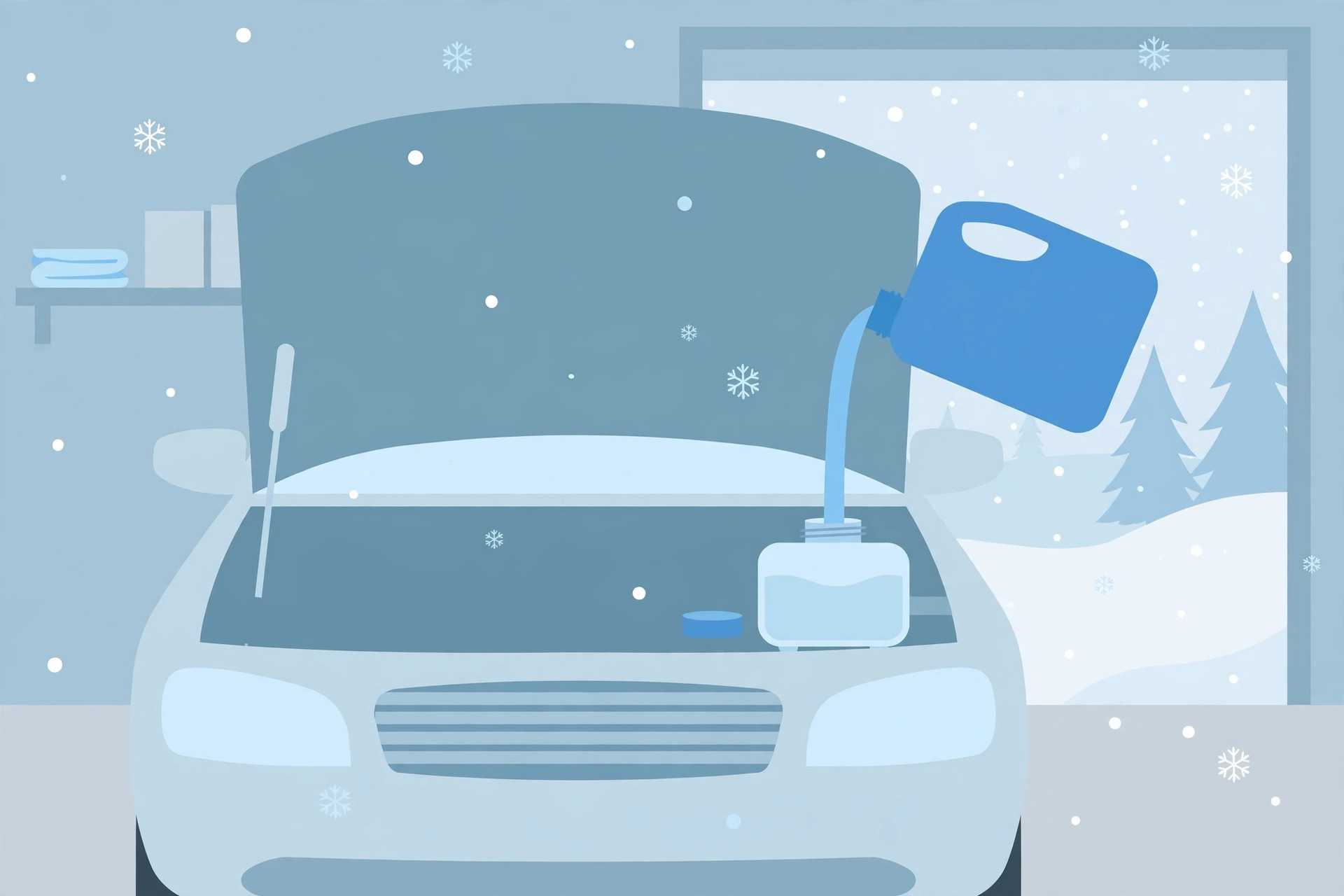
This is the least glamorous item on the winterizing list and one of the most practical. Fluids that worked fine in July can fail you in January, and wipers you barely noticed in summer become the most-used part of the car. The whole check takes less time than a coffee stop.
Washer fluid: the one fluid you should definitely change
Summer or all-season washer fluid freezes. Frozen washer fluid means no windshield cleaning exactly when salt spray is covering the glass every few miles — one of winter's genuine hazards.
Before the cold sets in, use up or drain the summer fluid and refill with washer fluid rated for freezing temperatures. The jug will say so clearly — look for wording like "winter" or a temperature rating on the label, and buy it at any auto parts store, gas station, or hardware store in the fall. It's inexpensive, and it takes about two minutes: pop the hood, find the reservoir (usually marked with a windshield symbol), and pour.
If you're unsure which reservoir is which, your owner's manual has a labeled diagram. Pouring washer fluid into the wrong reservoir is an avoidable, expensive mistake — when in doubt, ask.
Oil: let the owner's manual decide
Motor oil thickens in the cold, and modern engines are designed around a specific oil grade. Here's the good news: your owner's manual already answered this question. It lists the exact oil grade your car needs, and many manuals specify a different grade for very cold climates.
The practical version:
- If you're due for an oil change before winter, great — the fresh oil will be at its best for the cold months. Mention to your shop that you want the grade the manual specifies for winter use.
- If your last change was recent, just check the level with the dipstick (engine off, on level ground, wipe and re-dip) and top up with the same grade if it's low.
- Don't switch grades on a guess. The manual's recommendation beats anything you read on a forum.
Coolant: a glance, not a project
Coolant (antifreeze) keeps the engine from freezing as well as from overheating. Most cars have a translucent overflow reservoir with MIN and MAX lines — a visual check takes seconds. If the level is low, or the fluid looks rusty instead of its normal color, have a shop check it. Coolant strength is something a shop tests in a minute with a simple tool, and topping it off yourself with the wrong type for your car is a common mistake. This is a "check the level, let the shop handle the rest" item.
The thirty-second wiper check
Worn wipers smear instead of clearing, and winter is when you find out. Run this quick test before the season:
- Spray the windshield and run the wipers.
- Look for streaks, chatter, or unwiped arcs — any of those means the blade edge is worn or hardened.
- Lift each blade and check the rubber: it should be smooth and flexible, not cracked, split, or hardened.
Replacing wipers is one of the easiest car jobs there is — blades click or hook on, and the packaging usually shows your car's size. Winter-rated blades (with a rubber boot over the frame so ice can't clog the joints) are worth it if you get real snow. And remember: never run wipers over a frozen, ice-covered windshield to "scrape" it. Clear the ice first, then wipe.
The rest: quick visual sweep
- Brake fluid: the reservoir is usually translucent with a level line. If it's low, that's a shop visit — low brake fluid can mean worn brakes, not just evaporation.
- Power steering fluid: if your car has a dipstick or reservoir for it, a glance is enough.
- Belts and hoses: while the hood is open, look for cracks, fraying, or bulging hoses. A belt that snaps in a snowstorm is a tow truck story.
None of this requires tools or talent — just your eyes, the manual, and the willingness to ask your mechanic about anything that looks off.
The bottom line
Swap in winter washer fluid, follow the manual on oil, glance at the coolant level, and test your wipers. Twenty minutes in the fall, and your car sees clearly and runs cleanly all winter. Everything you couldn't identify with confidence? That's what the mechanic is for.